
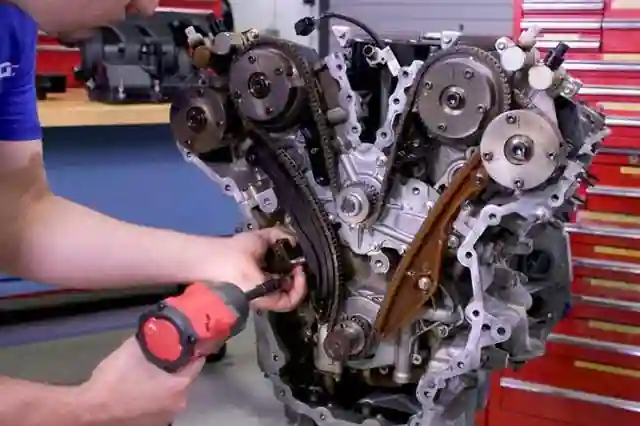
The timing chain is the heart of your engine’s synchronisation. Unlike timing belts, which are made of rubber and must be replaced at set intervals, timing chains are designed to last the lifetime of the vehicle. However, poor maintenance, degraded oil, and high mileage can cause the chain to stretch or the tensioners to fail.
1. The Infamous "Death Rattle"
The most common and obvious sign of a failing timing chain is a loud metallic rattling noise, especially on a cold start. This happens because the chain has stretched, and the hydraulic tensioner hasn’t built up enough oil pressure yet to take up the slack. If you hear a brief rattling noise that goes away after a few seconds, don't ignore it — it's the first warning sign.
2. Check Engine Light & Fault Codes
Modern engines use sensors to monitor the exact position of the camshaft and crankshaft. If the chain stretches, these shafts fall out of alignment. The engine's computer will detect this and trigger a Check Engine Light. Common fault codes include P0016 or P0340 (Camshaft Position Sensor Circuit).
3. Engine Misfires or Poor Performance
If the timing is off due to a stretched chain, the valves will open and close at the wrong time. This leads to a loss of power, rough idling, engine misfires, and increased emissions.
4. Metal Shavings in the Oil
As a loose chain slaps against the plastic chain guides, it can break them apart. It can also scrape against the metal engine casing. When you change your oil or cut open the oil filter, you might find small plastic pieces or metal shavings. This is a critical failure indicator.
Don't Wait for Catastrophic Failure
If a timing chain snaps or jumps teeth, the pistons will smash into the valves, requiring a complete engine rebuild. If you suspect your timing chain is failing, contact our mobile specialists immediately.