
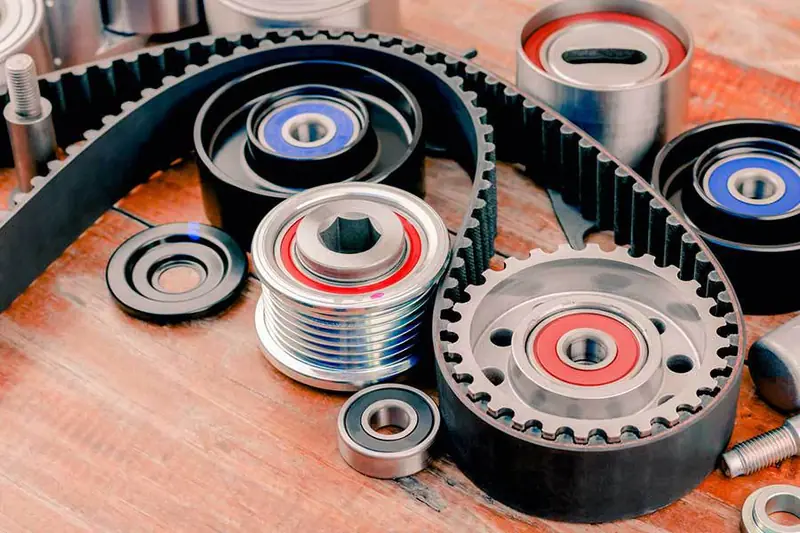
If you drive a modern Peugeot, Citroën, Vauxhall, Renault or Ford with a small-to-mid-size engine, there's a good chance your car uses a belt-in-oil (BIO) timing system — also known as a wet belt. It's a piece of engineering that was supposed to make cars cheaper to build and quieter to run. For many owners, however, it's become one of the most expensive and stressful mechanical failures they've ever experienced.
This guide explains exactly what a wet belt is, why it fails, how to recognise the warning signs, and what you should do if your car uses one.
What Is a Timing Belt?
First, some context. All combustion engines need the crankshaft (which converts piston movement into rotation) and the camshaft (which controls the intake and exhaust valves) to work in precise synchronisation. If these two components fall out of sync — even by a fraction — the engine can suffer catastrophic internal damage as the pistons collide with open valves.
The timing belt — also called a cambelt — is the component that keeps them in sync. It's a toothed rubber belt that wraps around sprockets on both shafts, locking them together. When the belt is healthy, everything runs smoothly. When it breaks, the engine typically requires a full rebuild, or is written off entirely.
Traditional timing belts run dry, in a sealed plastic cover away from oil and heat. They're well understood, relatively cheap to replace, and have been used reliably for decades.
So What Is a Wet Belt?
A wet belt — or belt-in-oil system (BIO) — does exactly what the name suggests: the timing belt runs submerged in engine oil. Rather than sitting in its own dry, sealed chamber, the belt operates inside the engine's lubrication circuit.
Engineers developed the BIO system for several reasons:
- Packaging: Removing the dry belt cover allowed engines to be made physically smaller and lighter.
- Noise: An oil-bathed belt runs significantly quieter than a dry belt — important as consumers demanded quieter cabins.
- Lubrication: In theory, constant lubrication was supposed to reduce wear and extend belt life.
- Cost: The wet belt allowed manufacturers to eliminate the chain-driven oil pump, simplifying the design.
On paper, it sounds logical. In practice, it has caused serious problems for hundreds of thousands of drivers across Europe.
Why Wet Belts Fail — The Core Problem
The fatal flaw in the BIO system is that engine oil degrades rubber. While the belts are manufactured from specialist polymer compounds designed to resist oil, the reality is that modern engine oils — particularly low-viscosity, long-life synthetic oils — contain chemical additives that attack the belt material over time.
As the belt degrades, several things happen:
- The rubber compound swells, softens and loses tensile strength
- The belt teeth become rounded, reducing grip on the sprocket
- The belt stretches, causing timing to drift
- In severe cases, the belt skips teeth — or snaps entirely
What makes this particularly dangerous is that the belt can look healthy right up until it fails. Unlike a dry belt, you cannot simply open the cover and inspect a wet belt without draining the oil and partially dismantling the engine. Many drivers have no idea there's a problem until they hear a bang and the engine stops.
⚠️ If your timing belt breaks while driving
Do not restart the engine. In an interference engine (the majority of modern engines), a broken timing belt means the pistons have almost certainly already struck the valves. Restarting will cause further damage. Have the car recovered and call a specialist immediately.
Which Engines Use a Wet Belt System?
The BIO system has been adopted by several major manufacturers, but two engine families have attracted the most controversy:
Stellantis PureTech (PSA EB Series)
The 1.0 and 1.2 PureTech three-cylinder petrol engines — found across Peugeot, Citroën, DS and Vauxhall (Opel) vehicles — have been the subject of widespread complaints, class action lawsuits, and multiple technical service bulletins. The PureTech wet belt has been singled out as one of the most problematic components in modern European car manufacturing. Read our full PureTech guide →
Ford 2.0 EcoBlue (Panther)
The 2.0-litre diesel engine used across the Transit, Transit Custom, Focus, and other Ford models also uses a wet belt system — and it has two belts: a timing camshaft belt and an oil pump drive belt, both running in oil. Ford has already revised the service interval downward from 10 years/240,000km to 6 years/100,000 miles following evidence of premature belt degradation caused by oil dilution from DPF regeneration cycles. Read our full Ford EcoBlue guide →
Other Affected Engines
- Renault / Dacia 0.9 and 1.2 TCe engines (H4Bt)
- Some Fiat 1.4 MultiAir engines
- Certain Nissan 1.5 dCi variants
- Some BMW and MINI N47/N57 diesels use a rear-mounted dry belt — a different issue entirely, but equally catastrophic when it fails
Warning Signs of Wet Belt Deterioration
Because the wet belt is hidden inside the engine, there are few visual clues. However, watch for:
- Rough or erratic idle: Timing drift caused by a worn or stretched belt can cause the engine to run unevenly at low RPM
- Metallic rattling on startup: A stretched belt may cause brief rattling before oil pressure builds — often dismissed as normal cold-start noise
- Increased oil consumption: Degraded belt material can contaminate the oil and accelerate consumption
- Engine warning light: A camshaft or crankshaft position sensor error (P0340, P0345, P0335 etc.) can indicate timing is off
- High mileage or age: If your car has covered 50,000+ miles and the belt has never been replaced, it's overdue regardless of any other symptoms
💡 The 50,000-Mile Rule
For PureTech and similar wet belt engines, many independent specialists — including ourselves — now recommend replacing the belt at 50,000 miles or 5 years, regardless of what the manufacturer's schedule says. The cost of a replacement (from £490 with us) is a fraction of a new engine (£3,000–£6,000+).
Why Doesn't the Manufacturer Warn You?
This is a question we're asked constantly. The honest answer is: liability. Manufacturers set service intervals based on controlled lab testing. Real-world conditions — short journeys, oil quality variation, climate — can accelerate belt wear beyond what laboratory models predict. Rather than shorten service intervals (and implicitly admit a problem exists), many manufacturers have been slow to act.
Stellantis has extended warranties on some PureTech vehicles and issued revised service schedules following widespread failures and legal action. This is welcome, but many cars are already outside warranty age. If your vehicle is out of warranty, you carry the risk — and the cost.
What You Should Do Right Now
If your car uses a wet belt or BIO timing system, here's what we recommend:
- Check your service history. Has the timing belt ever been replaced? If you don't know, assume it hasn't.
- Check the mileage. If you're approaching or past 50,000–60,000 miles with the original belt, book a replacement.
- Check the age. Even low-mileage cars can suffer belt degradation from oil contact. 5 years is a reasonable maximum for a wet belt, regardless of mileage.
- Don't ignore warning signs. Rough idle, rattling or fault codes related to cam/crank timing should be investigated immediately.
- Get a specialist opinion. Many garages treat wet belts the same as dry belts. They're not. Use a mechanic who understands the specific failure modes of your engine.
Wet Belt Concern? Get a Free Quote
We're wet belt specialists based in Milton Keynes, covering a 15-mile radius. We carry out PureTech and EcoBlue timing belt replacements at your home or workplace. Call for a free, fixed-price quote.
Frequently Asked Questions
Can I keep driving with a deteriorating wet belt?
No. If you have any reason to believe your wet belt is worn or overdue for replacement, do not drive the vehicle until it's been inspected. The belt can fail without warning and the resulting engine damage is typically not economical to repair.
How much does a wet belt replacement cost?
It varies by engine and vehicle. We replace PureTech belts from £490 including belt, tensioner, guides, and oil change (necessary to flush degraded oil from the belt system). Ford Transit EcoBlue belts start from £950. Call us for a fixed price quote on your specific car.
Is a chain better than a wet belt?
Generally, yes — a timing chain is more durable and, unlike a belt, typically doesn't have a fixed replacement interval. However, chains stretch over time, require correct oil specification, and can be noisy when worn. They are not maintenance-free, but they are less prone to sudden catastrophic failure than a degraded wet belt.
Will my warranty cover timing belt failure?
If your vehicle is within the manufacturer's warranty period, catastrophic belt failure may be covered — especially on PureTech vehicles following Stellantis's extended warranty programme. However, if the belt failure is caused by missed service intervals, cover may be refused. Check your warranty documentation carefully and keep your service records up to date.